Technical communicators help you every day; most times, you don’t even realize it.
Last night, just before dark, they arrived at my house in Essex, Vermont. Raymond and Leah. They delivered two cords of fire wood from their business property in Glover, a distance over back roads of about 70 miles. Now Glover truly qualifies as being in the middle of nowhere, however, I live on a dirt road that isn’t all that easy to find either.
When Leah and I made the arrangements for the firewood, I asked if she needed directions. After all, they had never been here before. But she demurred. “We have GPS,” she said. “Raymond relies on it, so I’m sure we won’t have any difficulties.”
And so, through the help of their GPS device, they arrived. Leah got out of the truck first, introduced herself, and shook my hand. She had a kind face, a quiet confidence about her, and was clearly in charge of the financial aspects of the business—she had a standard invoice form in her hand with the details of our transaction hand printed clearly. Raymond, a tall, slightly gangling man, ebullient by nature with a winning smile, came around the side of the truck and held out his hand. “This is Raymond,” Leah said. We shook hands. Firmly.
“So Raymond,” I asked, “Did you have any trouble finding my house?”
“Oh no,” he said with that Vermont drawl. “My GPS gets me anywhere.” He pulled the device out of his pocket and began showing me how he used it for directions from Glover to my house. The device was well labeled, with a clean interface and clear maps that directed him, without misadventure. Raymond was very proud of this GPS, and his ability to use it.
I thought, “Raymond. Thank a technical communicator.”
Some events make it simple to realize that you have achieved a positive gain on time and money. In these cases, the gain has been immediate, clearly recognized, and sometimes even documented for you. Go to a supermarket, buy something on sale, and there is your money savings recorded for you on your receipt. Easy. Take a shortcut on a journey; a simple glance at your watch tells you how much time you have saved. Easy. Post that unused item in the want ads; someone gives you cash for it. Easy.
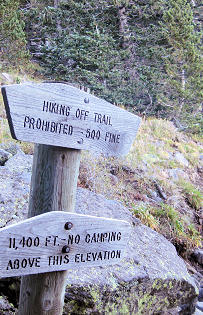
This trip, our goal was to summit four of the forty-six 4,000-foot peaks in New York’s Adirondack park. (Actually, there are only 43 such peaks. Apparently, past climbers couldn’t measure very well, but history dictates compliance with their inaccurate measurements.) Four days, 32 miles, 12,000 feet of elevation gain, fifty-pound packs, all planned with a guide book last published seven years ago—an eon for the Adirondacks where landscape-altering storms are the norm.
Practitioners become certified in six core competency areas:
When you communicate well, you clarify concepts and ideas. You are able to understand and work with the recipients of your message. You will also be able to inform, instruct, and persuade them to do what you want them to do, to achieve your desired results. In fact, the most effective communicators not only influence and persuade their audience to act in a specific way, but also these communicators convince their audience to do so.
Have you looked critically at your Twitter stream? Is it laden with the same sort of trite tweets that I receive? Apparently, we are not alone. After a bit of research, I discovered a recent study demonstrated that the vast majority of tweets—upwards of 87.7 percent—border on useless, falling between spam and “pointless babble”. That leaves only one out of every eight tweets actually containing valuable information. Who has the time to sort through that? I certainly don’t, and I suspect you don’t either. So what to do?
And with that simple decision, I embarked on an incredible journey that has enhanced both my personal and professional life far beyond any heights that I could have imagined. To that, I am indebted to STC and its members.

To be most effective, your communication must adhere to these ten tenets. Effective communication is: